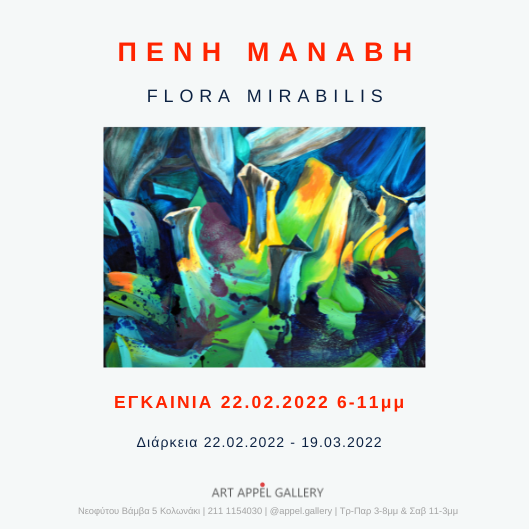
SOLO EXHIBITION
Peny Manavi
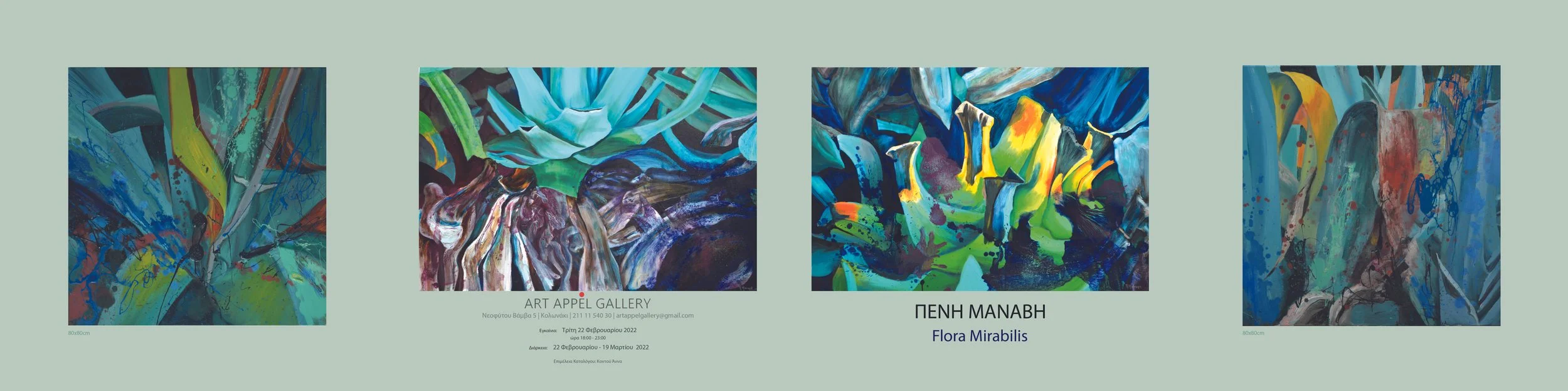
Flora Mirabilis
February 22, 2022 — March 19, 2022
Art Appel Gallery
Neofytou Vamva, 5
Athens, Greece
Flora Mirabilis
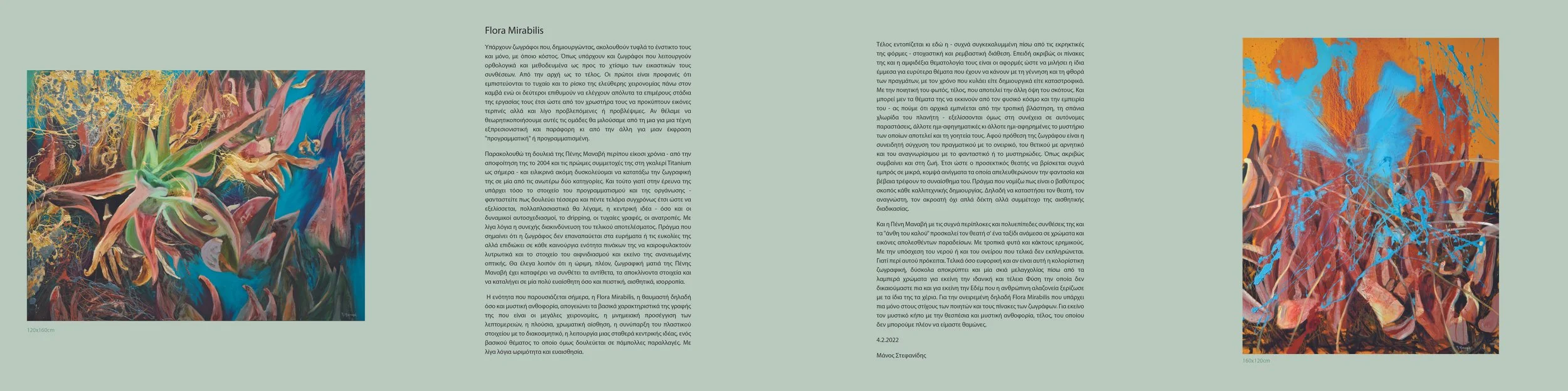
There are painters who, while creating, blindly follow their instinct alone, at any cost. Similarly there are painters who function rationally and methodically concerning the making of their artistic compositions. From beginning to end. The former obviously trust the random and the risk of spontaneous gesture on the canvas whereas the latter wish to utterly control the individual stages of their work so that their paintbrush creates delightful yet somewhat predictable images. Should we wish to theorise these groups, we would speak of expressionistic and passionate art on one hand yet “programmatic” and scheduled expression on the other.
I’ve been following Peny Manavi’s work for about twenty years – ever since her graduation in 2004 and her early participations in Titanium Gallery up until today – and I honestly still have a hard time classifying her work in one of the two categories above. And that is because in her research equally exist the programming and organizing element – have in mind that she’s working on four or five canvases simultaneously so that the main idea evolves in a multiplying manner – as well as the dynamic improvisations, the dripping, the random scripts, the upheavals. In short, constantly risking the final outcome. This meaning that the artist does not find comfort in her own findings or facilities, but she aims in every new series of paintings to be lurked by the element of surprise and that of a renewed pespective. So I would say that the, mature, now, artistic view of Peny Manavi has managed to compose the opposites, the diverging elements and to conclude to a very sensitive as well as aesthetically convincing, balance.
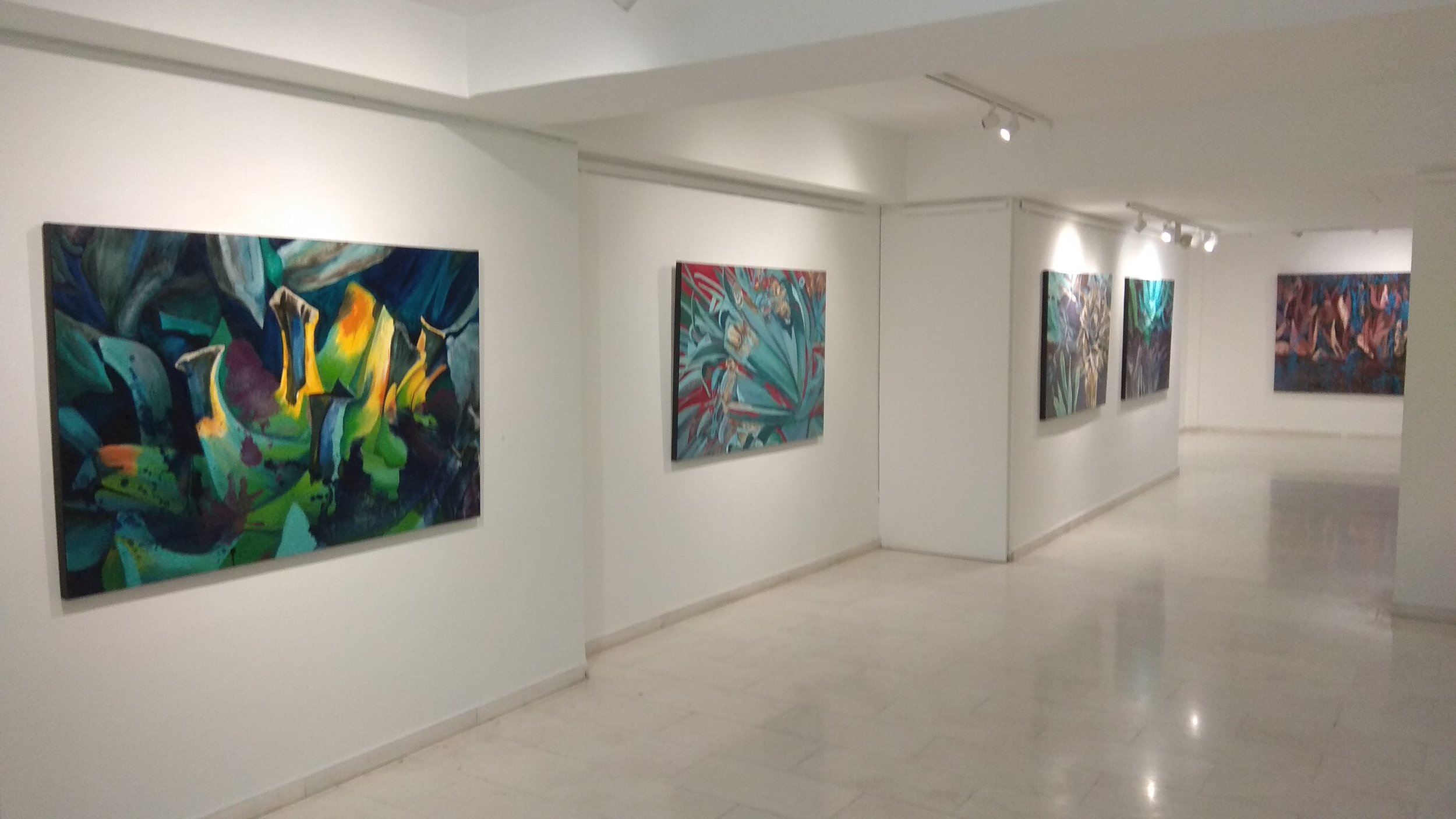
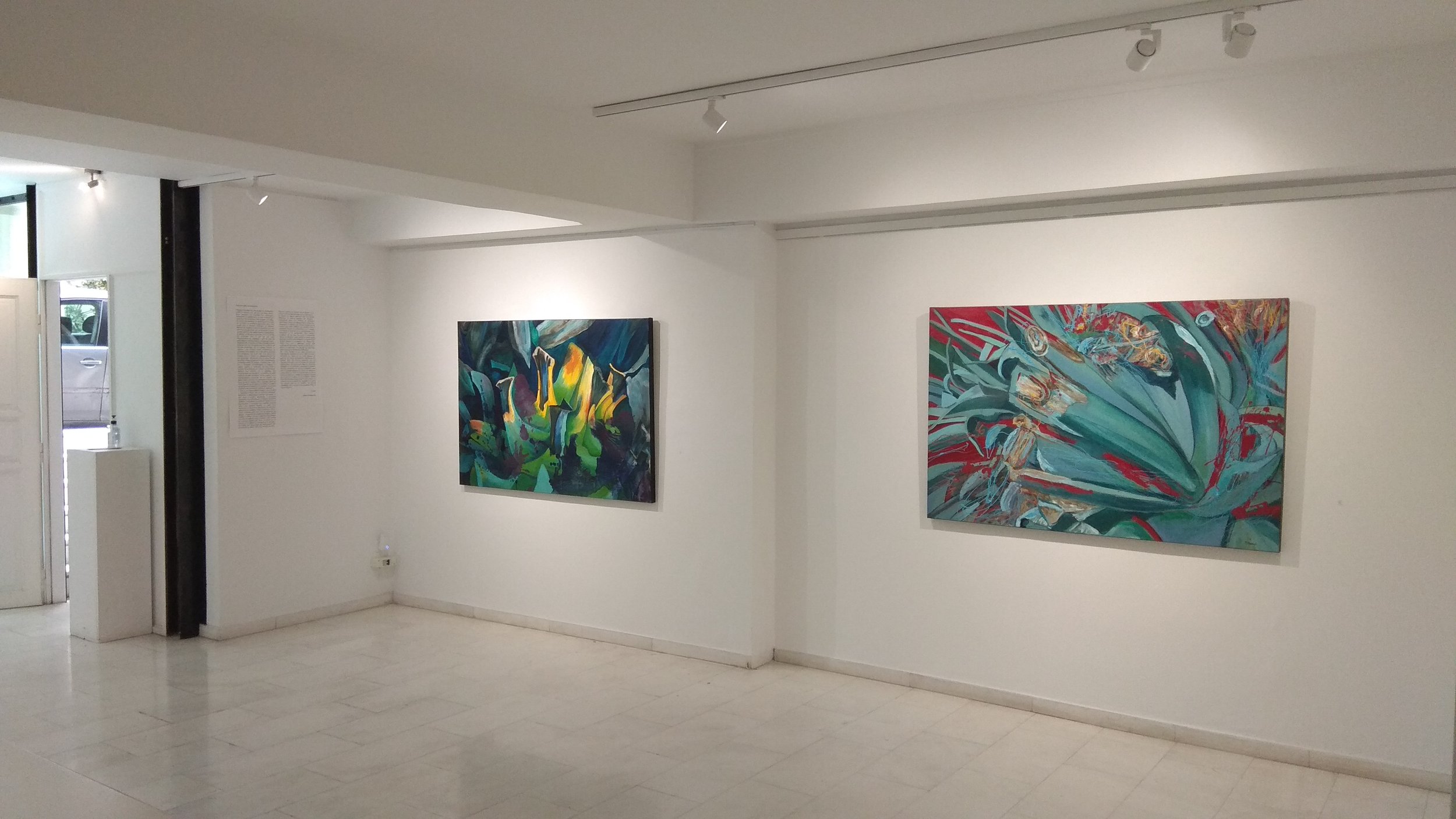
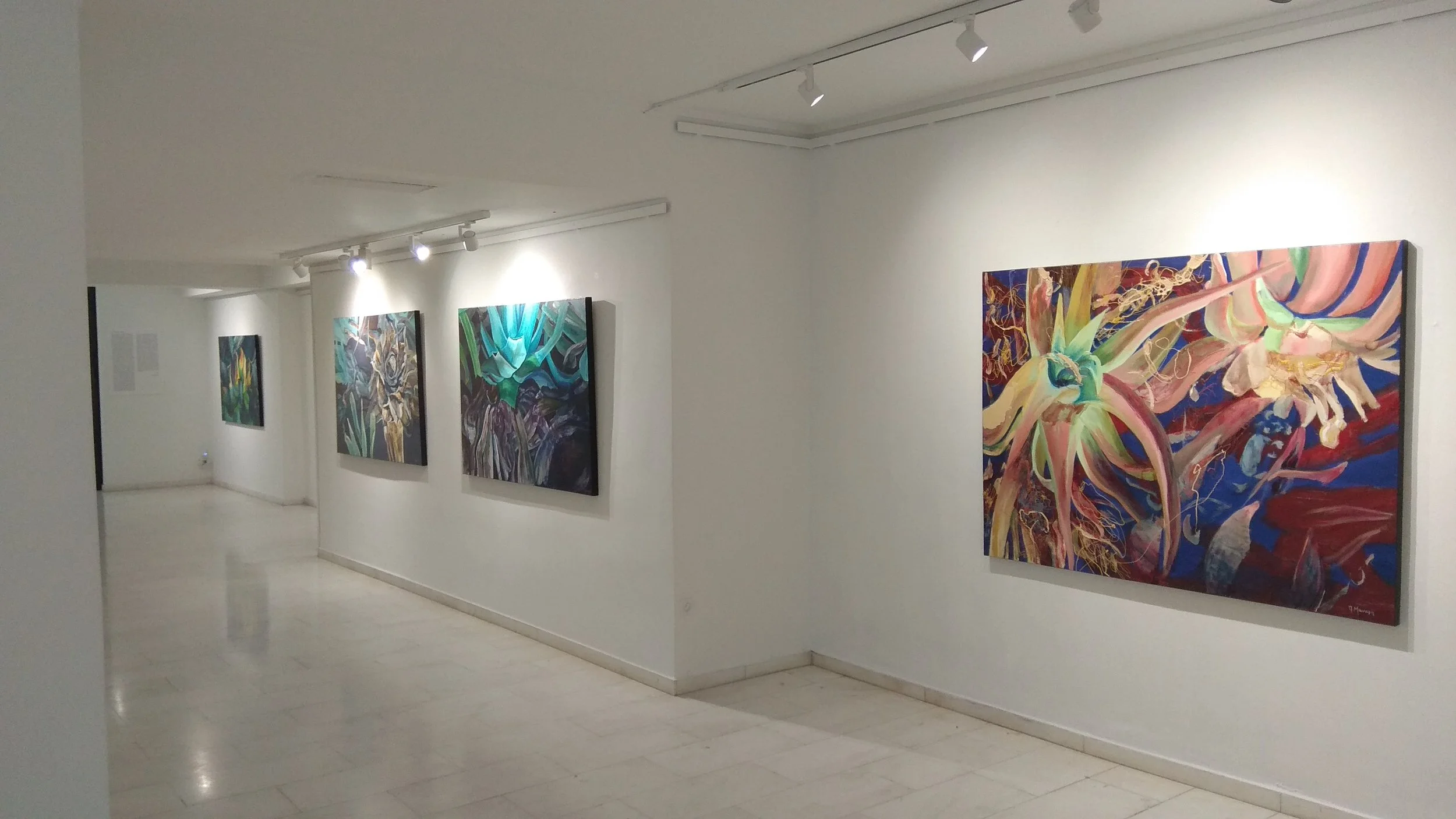
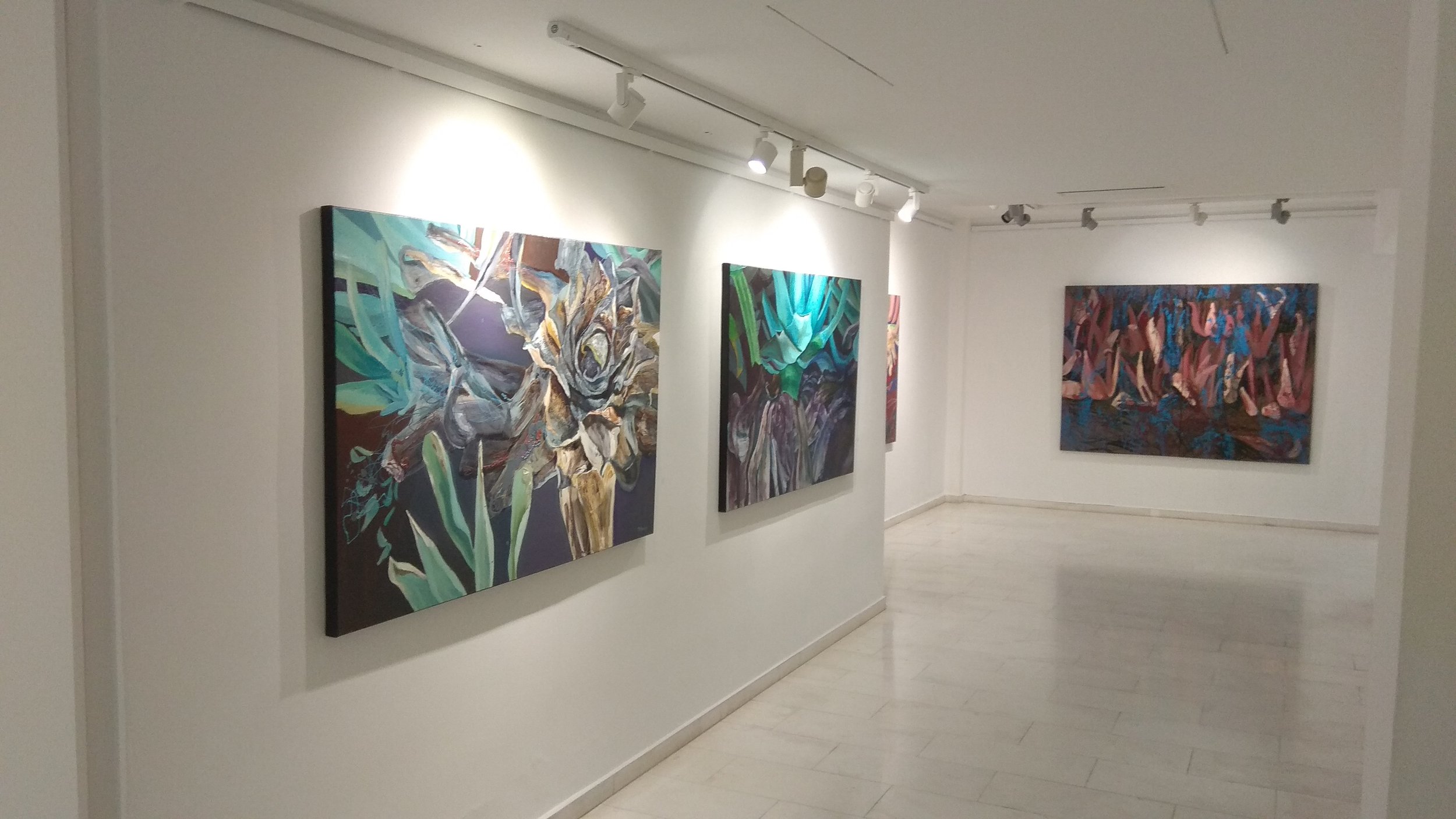
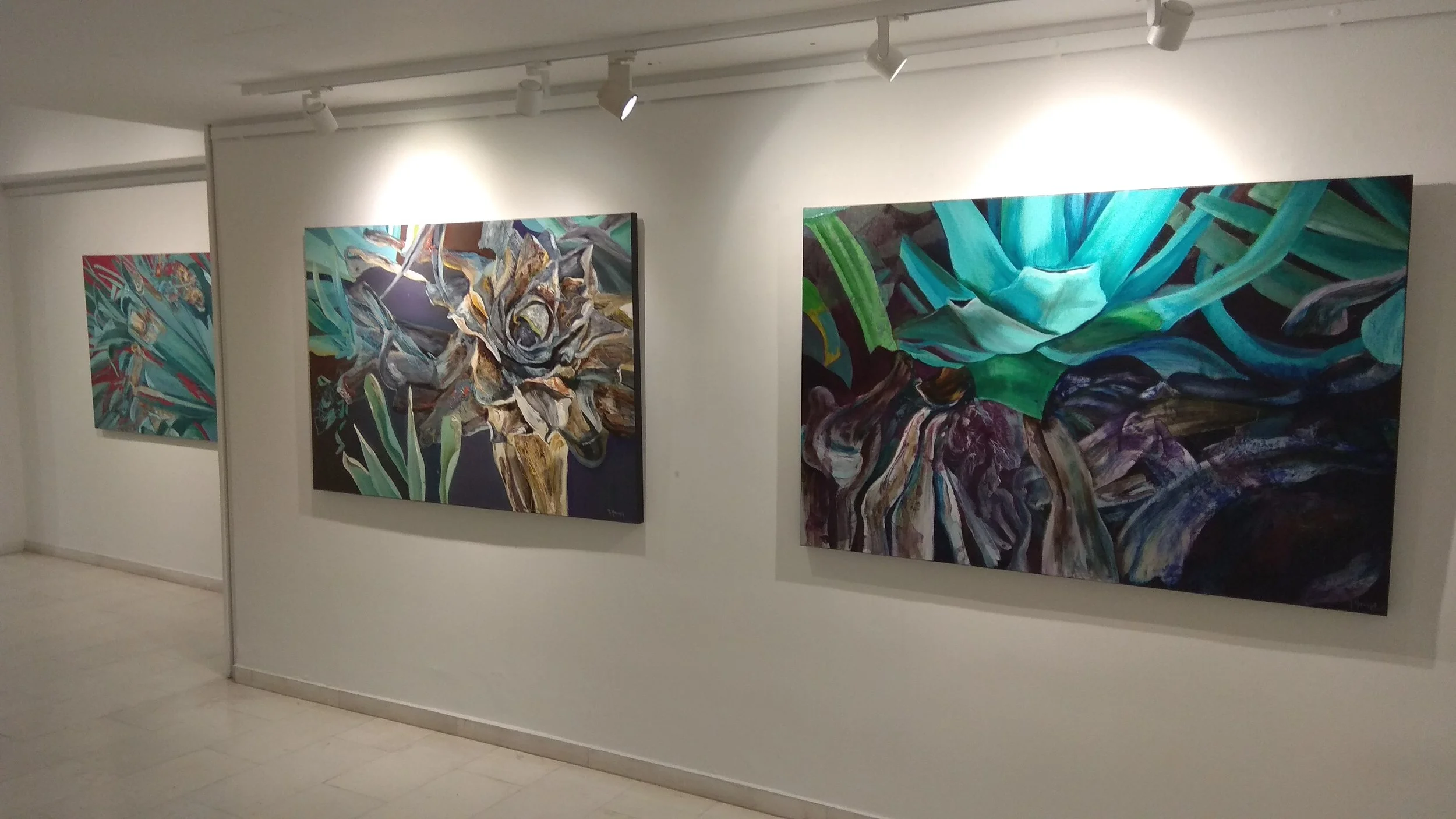
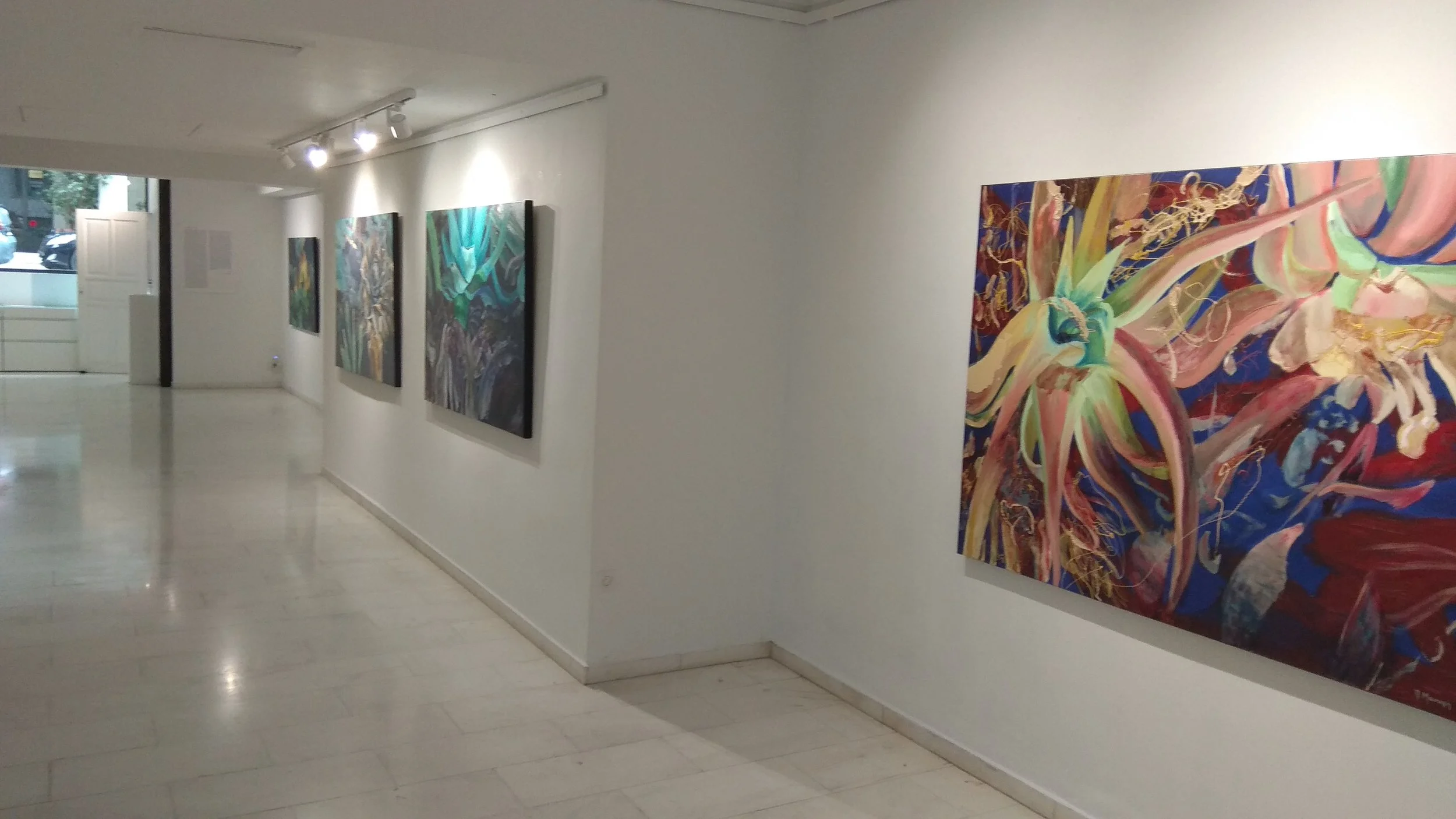
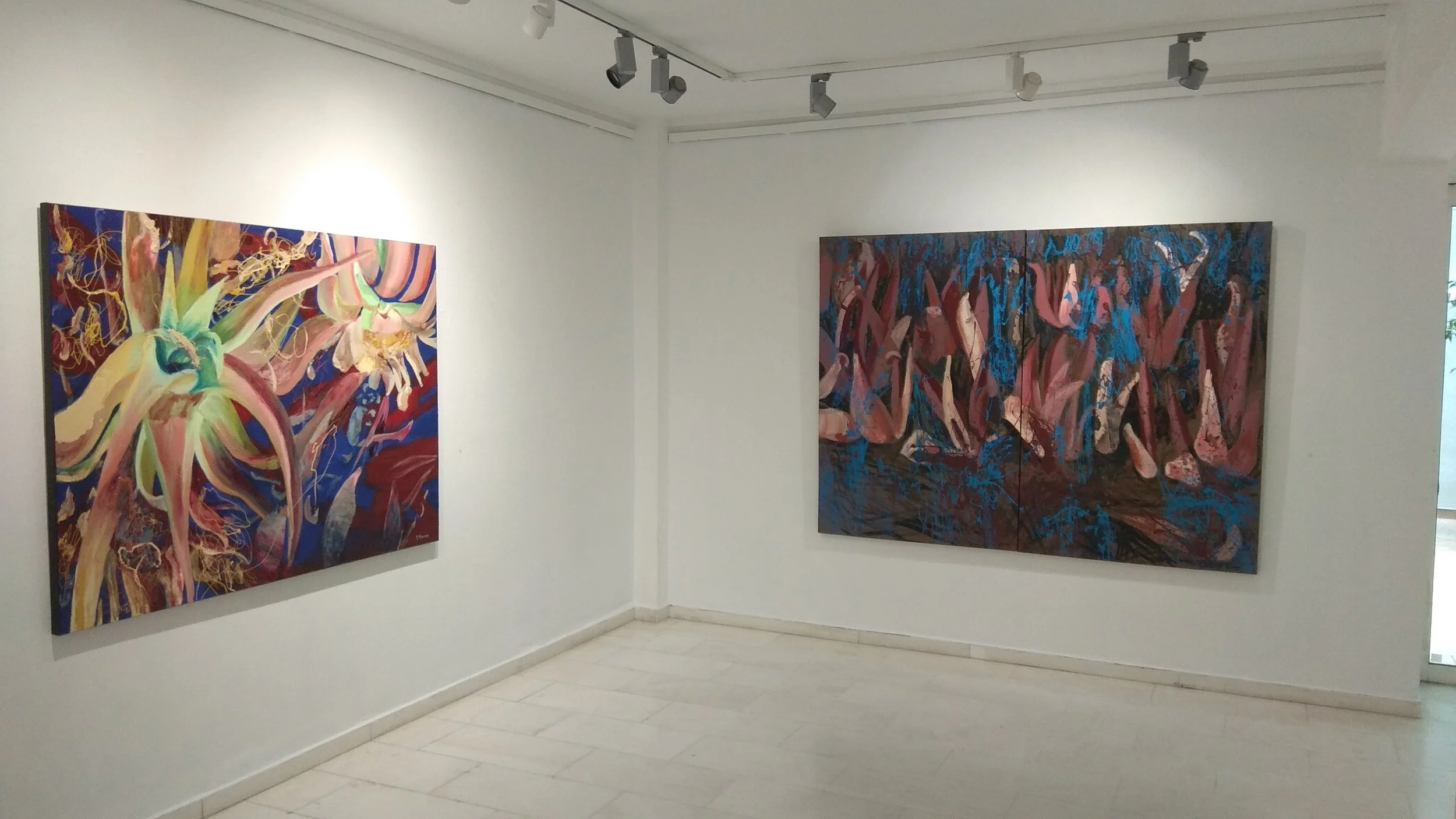
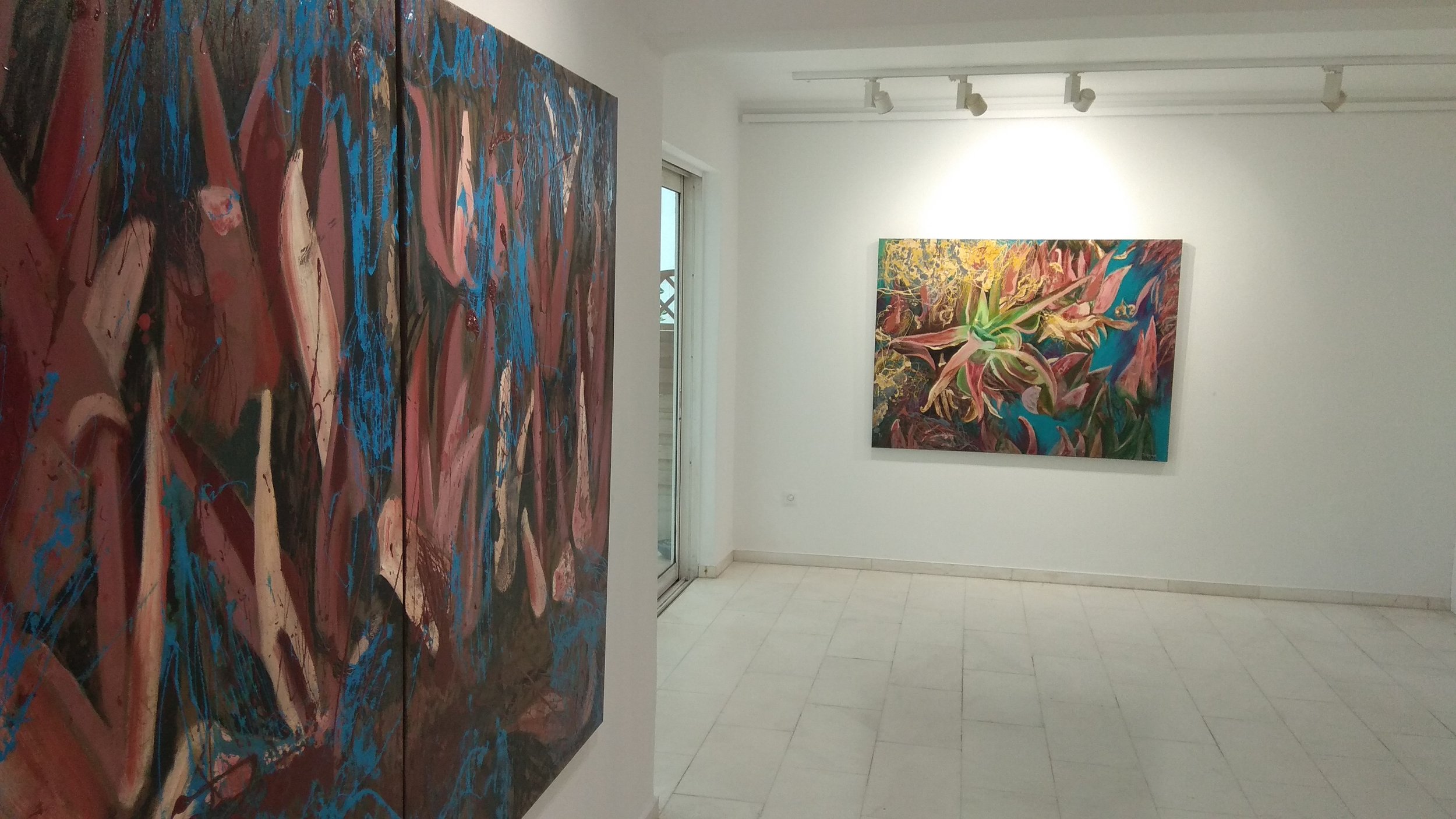
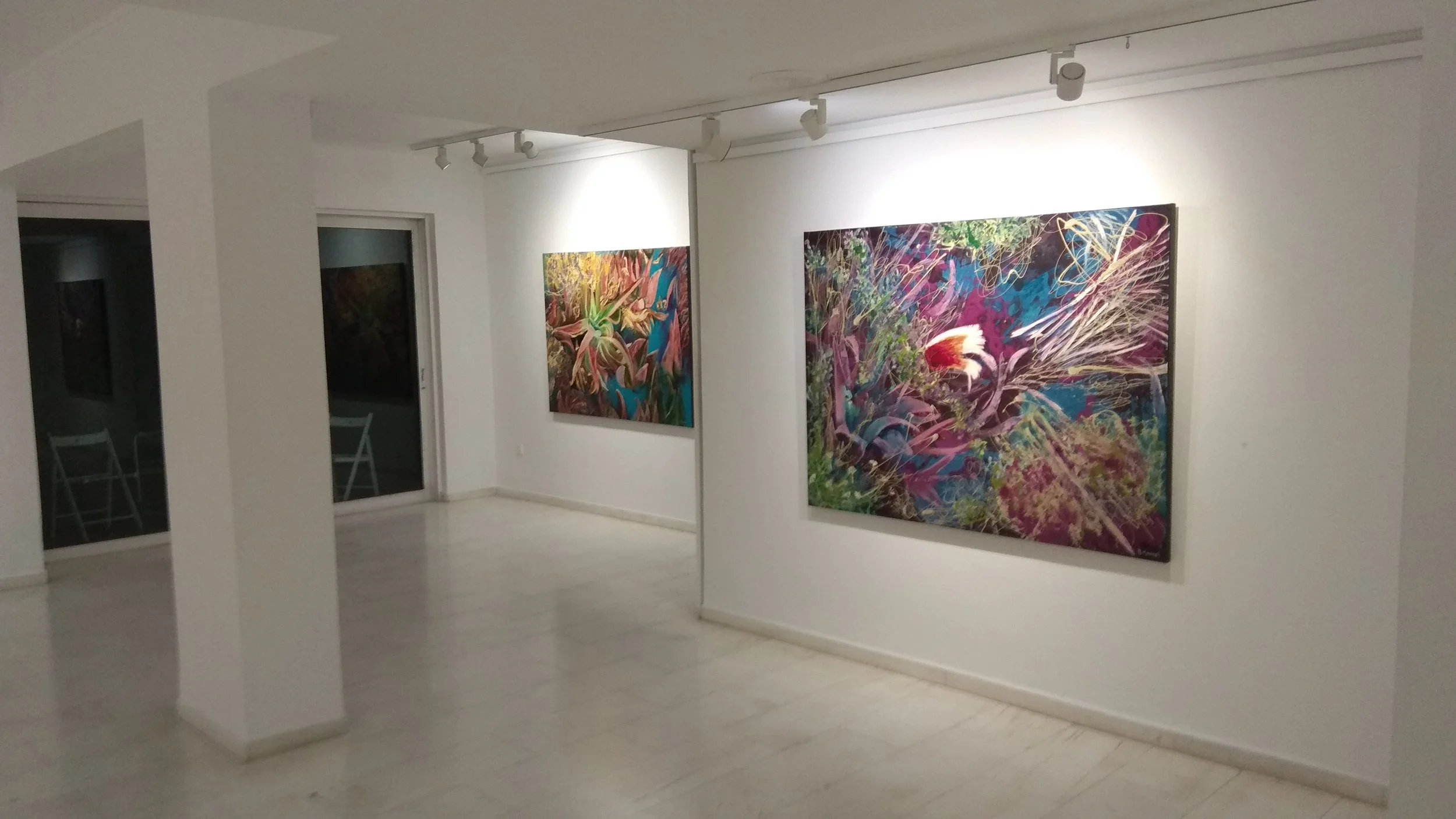
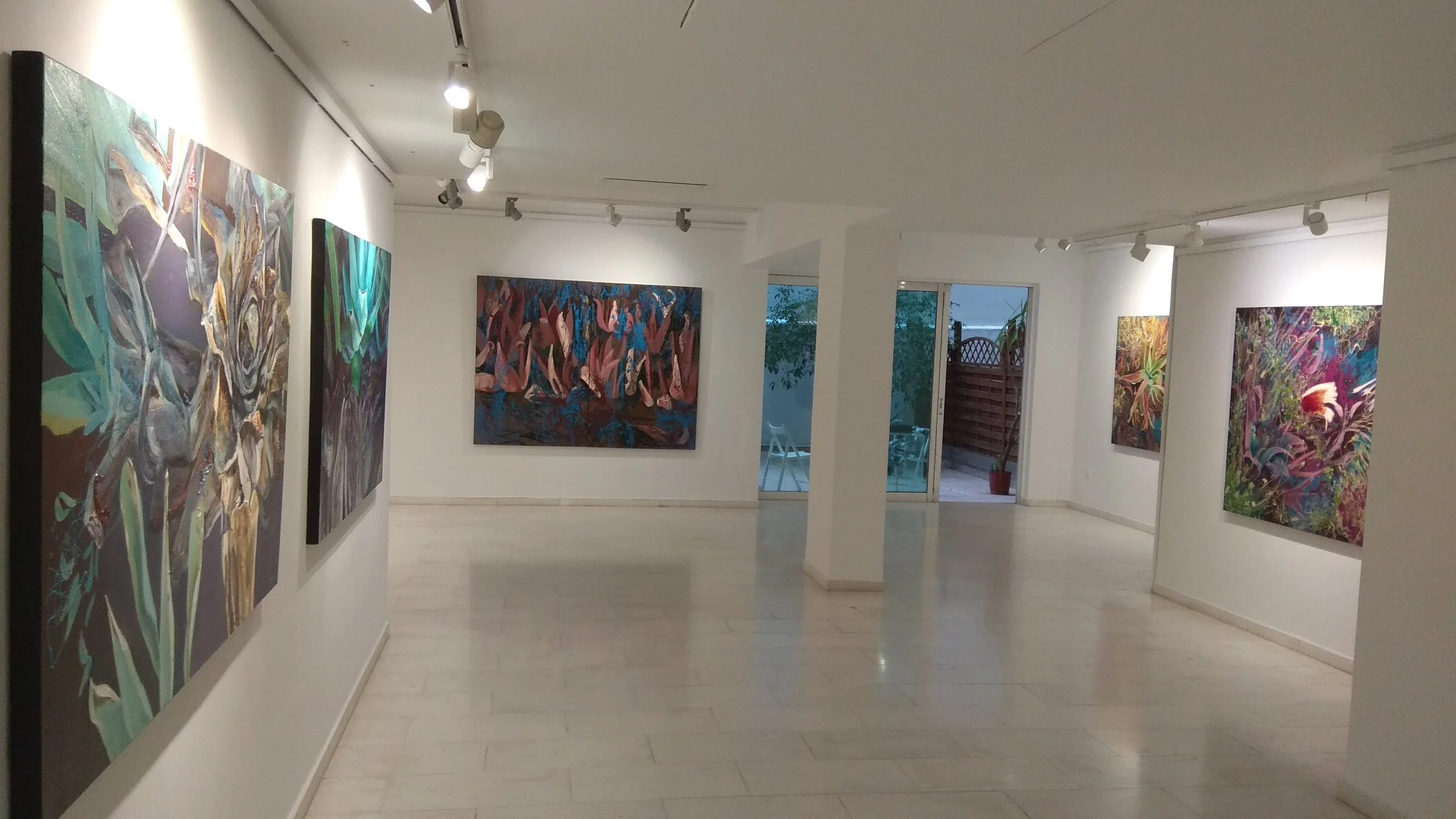
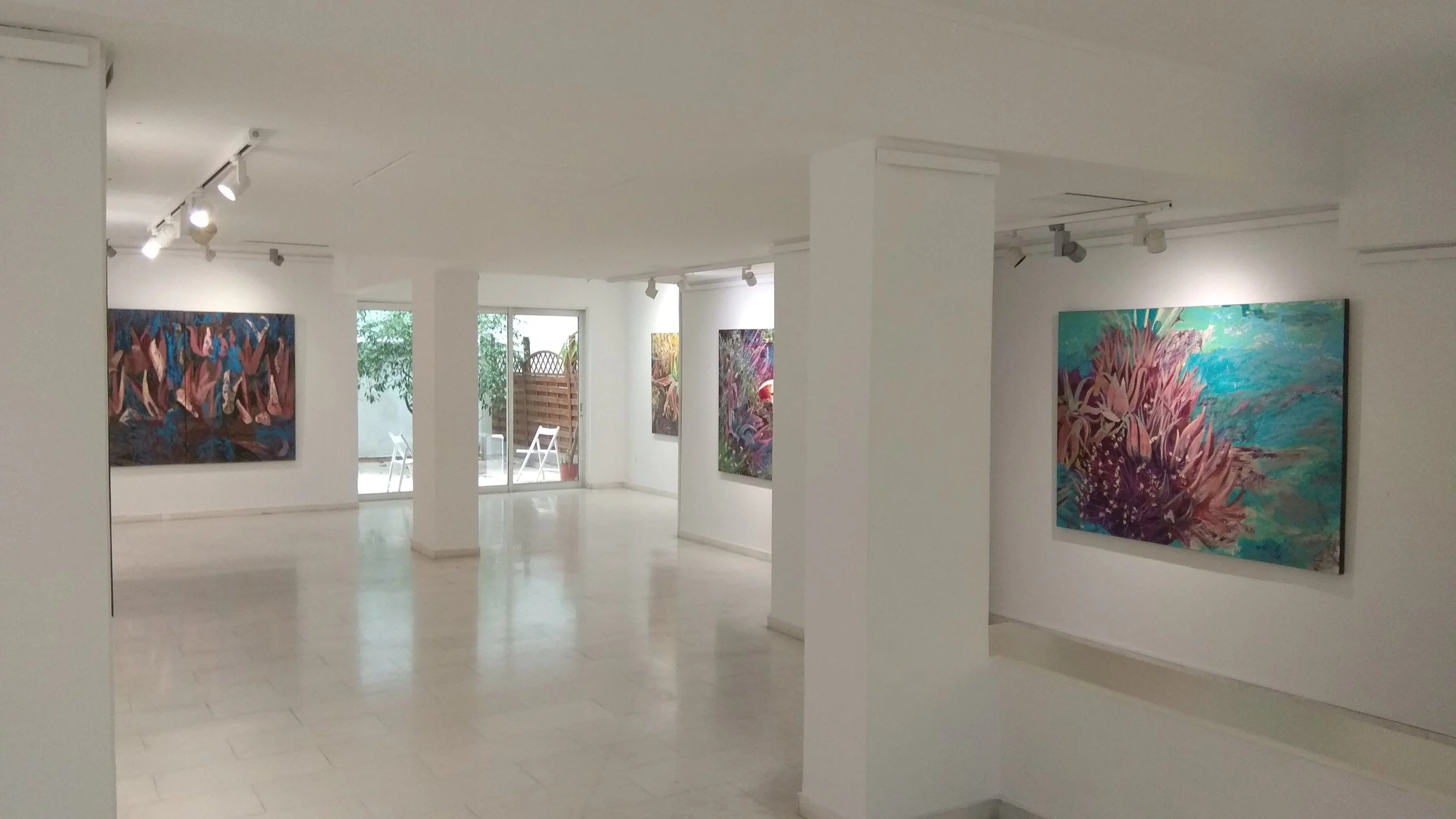
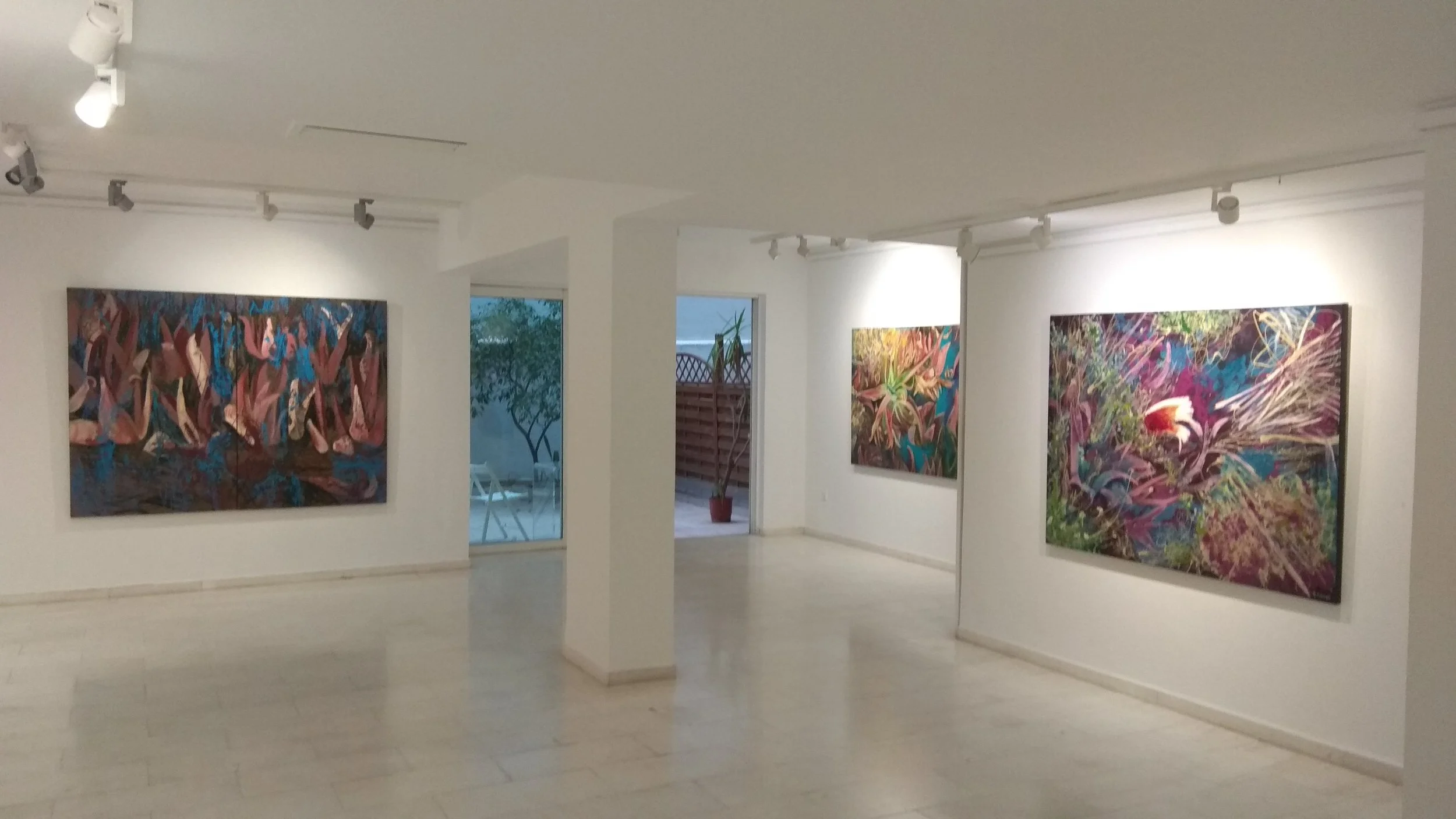
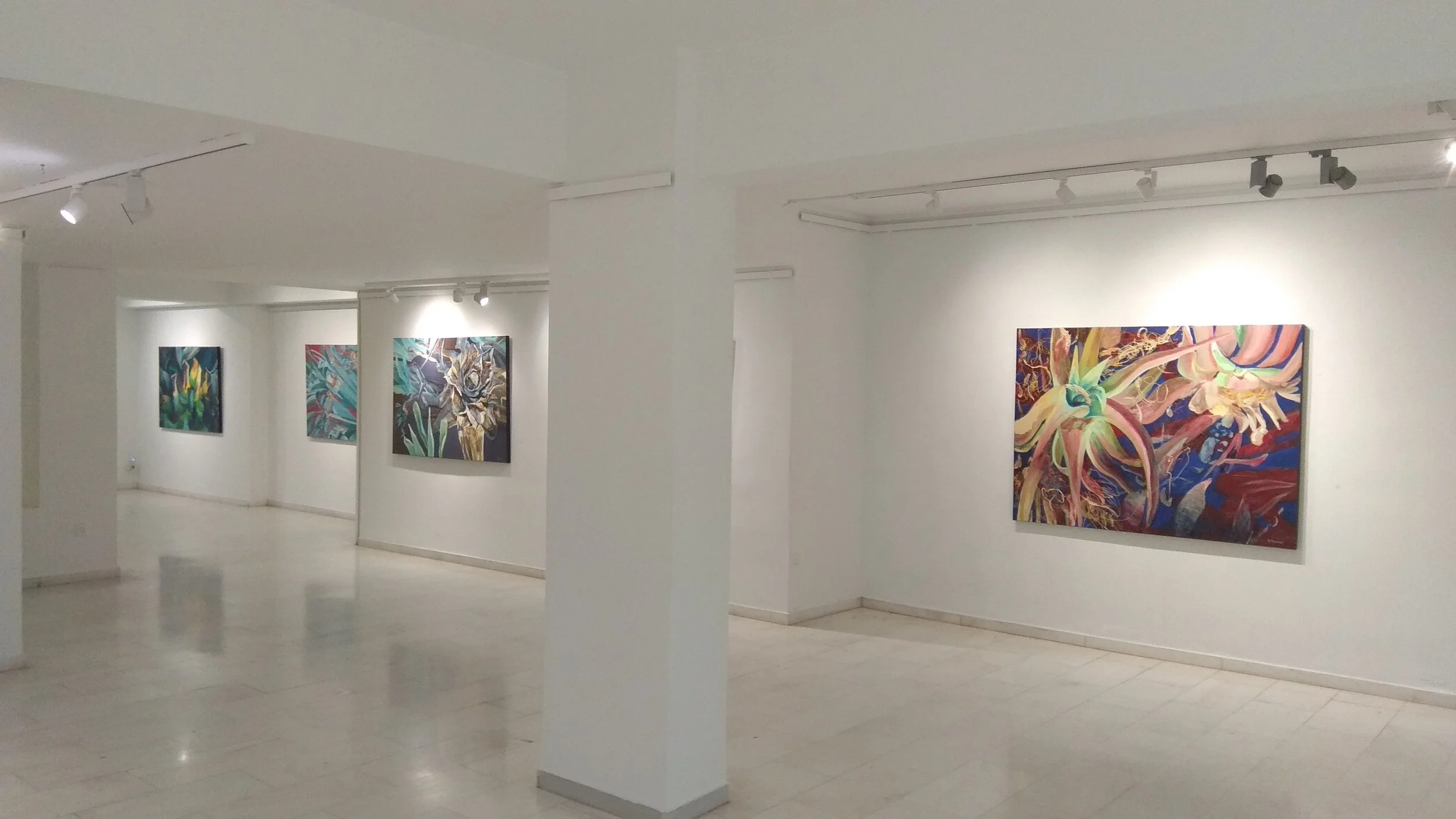
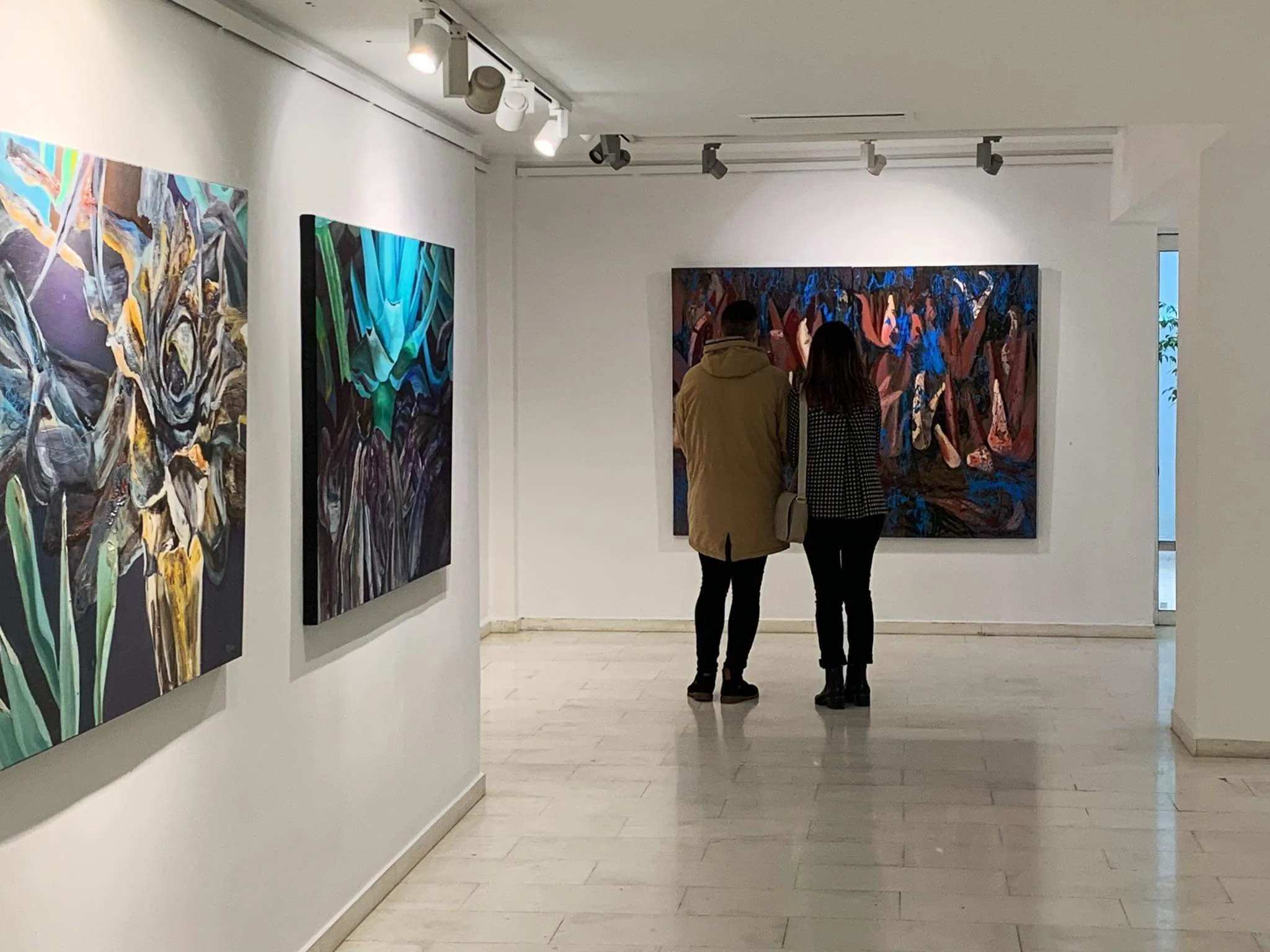
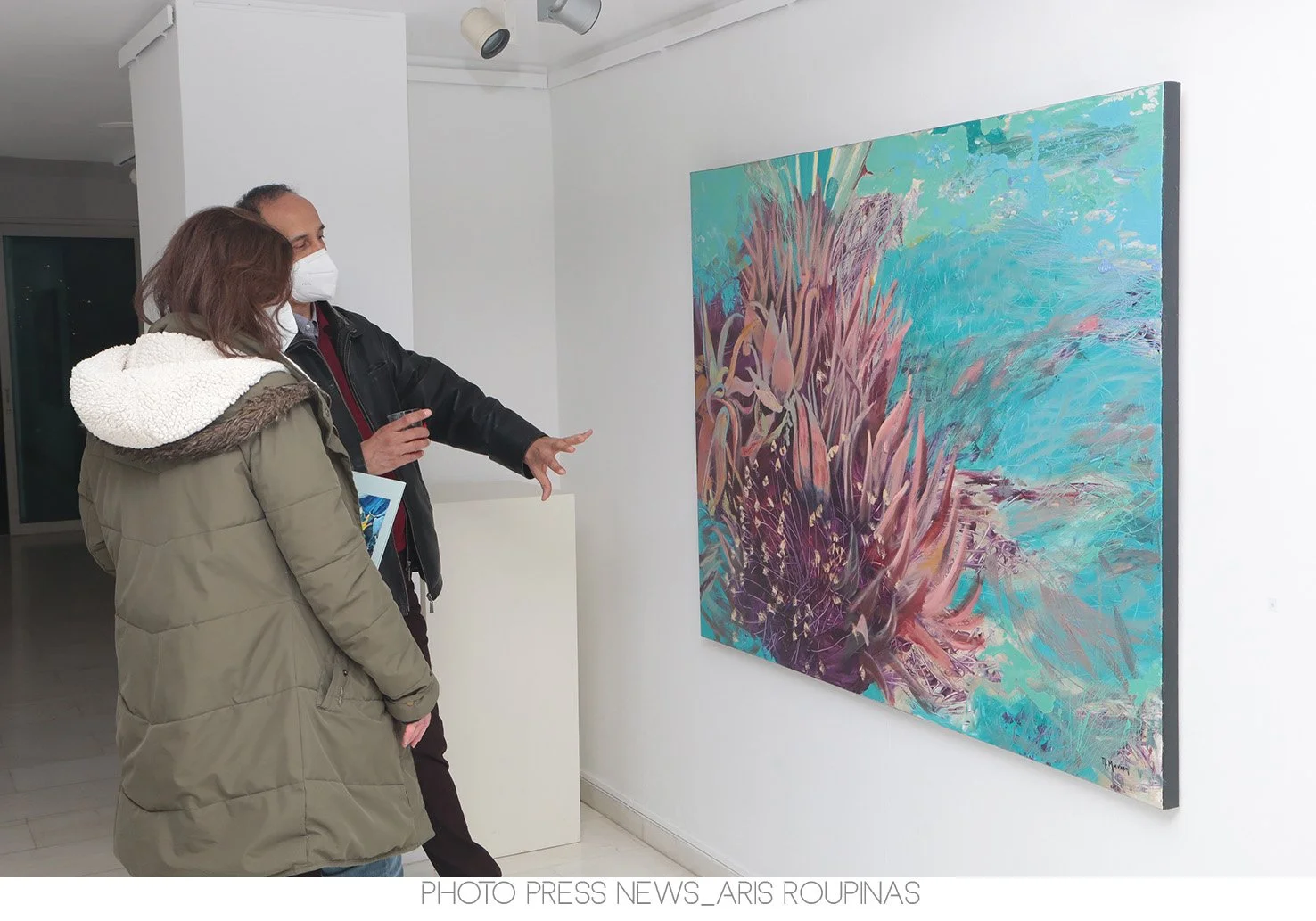
The work presented today, Flora Mirabilis, the marvellous as well as secret florescence, is skyrocketing the basic characteristics of her style which are the large gestures, the monumental approach of details, the rich, colour sensation, the co existence of the plastic element with the decorative, the function of a constant main idea, a basic theme which is explored in numerous variations. In a few words, maturity and sensitivity.
Finally, one can find here as well – often disguised behind her explosive forms – a contemplative and dreamy mood . Precisely because her paintings and their ambidextrous themes are the occasion for her to indirectly address wider issues related to genesis and corrosion of things, with time passing by either creatively or catastrophically. With the poetry of light, finally, constituting the other side of darkness. It may be that her themes originate from the natural world and its experience –let us say she’s initially inspired by the tropical vegetation, the rare flora of the planet –yet on the other hand they evolve into independent representations, sometimes semi-narrative and sometimes semi-abstract, the mystery of which is their actual charm. Since the painter's intention is the conscious confusion of the reality with the dream, the positive with the negative and the recognisable with the imaginary or the mysterious. Just as it happens in life. This way the cautious viewer finds himself constantly in front of small, elegant puzzles which liberate his imagination and of course nourish his feeling. Which I believe is the deepest purpose of every artistic creation. That is to set the viewer, the reader, the listener not simply a receiver but instead a participant of the aesthetic process.
And Peny Manavi with her often complex and multi-layered compositions and her "flowers of good" is inviting the viewer to a journey among the colours and images of lost heavens. With tropical plants and desert cacti. With the promise of water, or even a dream, that is eventually not fulfilled. Because that's what this is about. In the end, as euphoric as this colorist painting may be, it can hardly conceal a shadow of melancholy behind the bright colors for that ideal and perfect Nature which we are no longer entitled to and for that Eden that human arrogance ripped out with its own hands. For the dreamy Flora Mirabilis that now only exists in the lyrics of the poets and the paintings of the painters. For that secret garden with the exquisite and secret florescence, finally, of which we can no longer be habitués.
4.2.2022
Manos Stefanidis
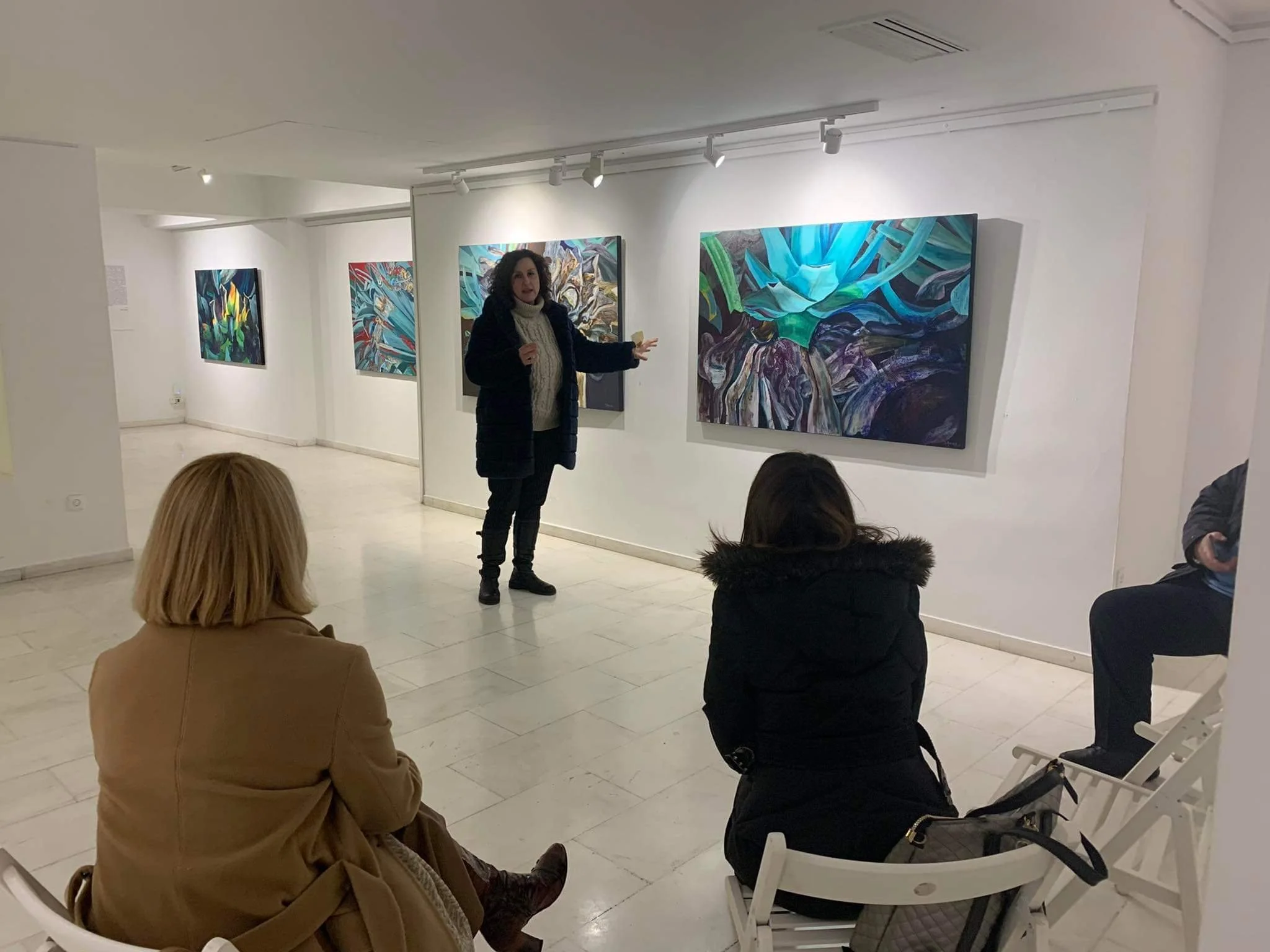
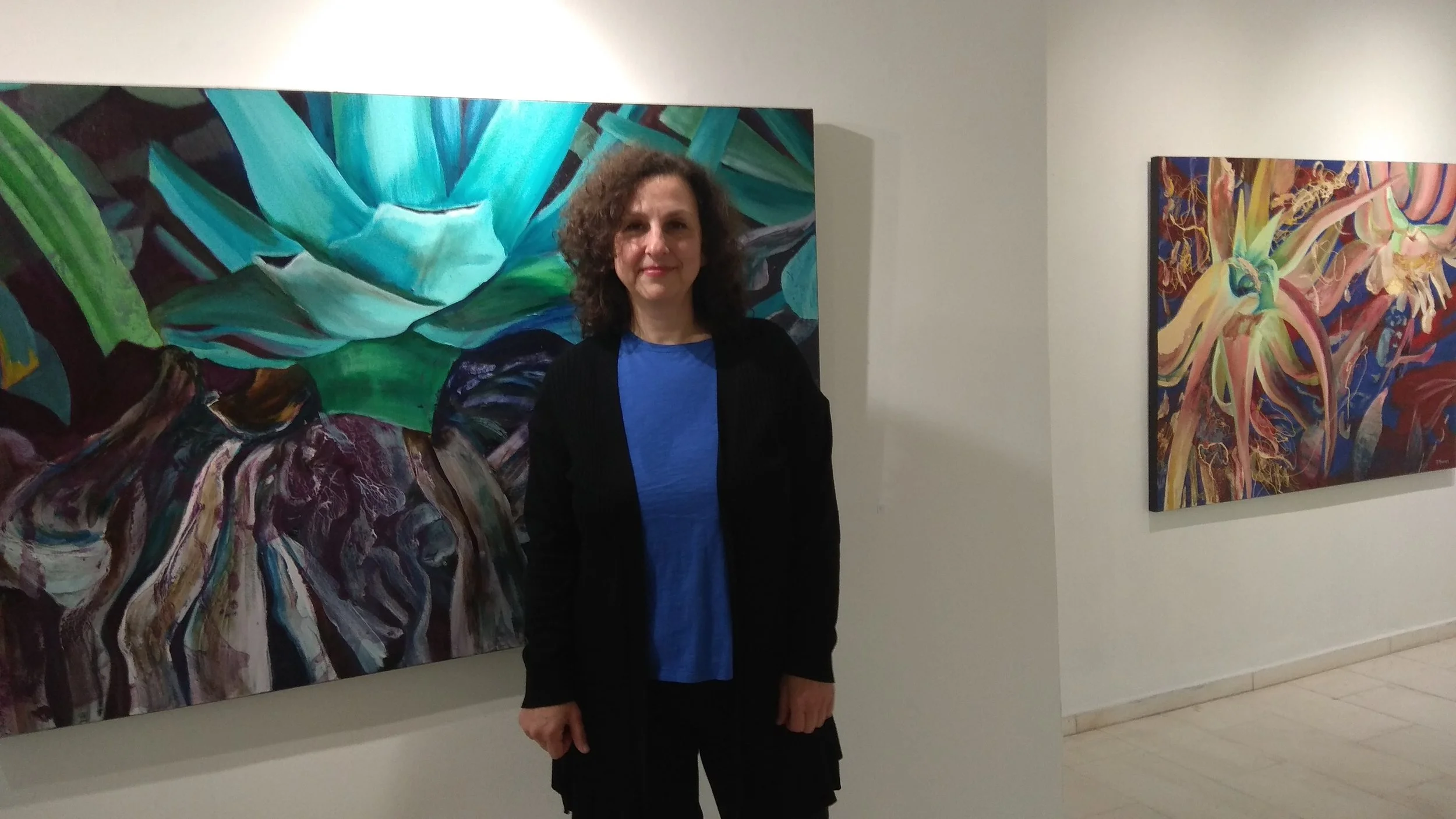
INSTALLATION VIEWS